
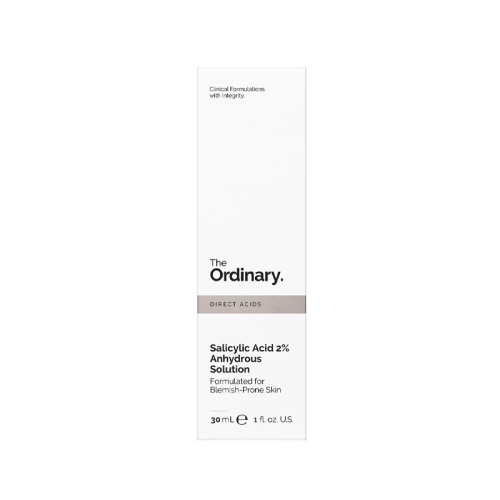
The Ordinary Salicylic Acid 2% Anhydrous Solution - Salisilik Asit Serum
30 ml
The Ordinary Salicylic Acid 2% Anhydrous Solution is a dry skin serum formulated to unclog pores and treat blackheads and cystic acne. The salicylic acid in it helps break and shed dead skin cells, promoting skin renewal. Since it is anhydrous (dry), it is oil-based and does not leave a greasy feel on the skin. Squalane, a natural oil, moisturizes and softens the skin. Salicylic acid is used here at up to 2.0%, which falls within the permitted limits depending on skin type. Phenoxyethanol is included as a preservative to prevent microbial growth and is allowed up to 1.0% under EU cosmetic regulations, which is within the safe range used in this product.
iBilmen gerekenler
Salicylic Acid: This product is a skin serum, and salicylic acid is among the permitted substances for this category; the usage level of 2.0% is within the allowed limits.
Dayanak: EU 1223/2009 Annex III · restricted · izinli ürün tipi: (b) Other products except body lotion, eye shadow, mascara, eyeliner, lipstick, roll-on deodorant · azami 2.0%
Phenoxyethanol: Phenoxyethanol is a preservative allowed up to 1.0% under EU cosmetic regulations and is used within the safe range in this product.
Dayanak: EU 1223/2009 Annex V · allowed · azami %1.0000
İçerikler
Etkili maddeler
1Ürünün asıl işini yapan maddeler.
Bakım verenler
1Temizlemenin ötesinde iş yapar: nemlendirme, yumuşatma, güçlendirme.
Koruyucular
2Ürünün içinde bakteri ve küf üremesini engeller.
Kıvam ve doku
2Ürünün kıvamını, sürülmesini ve dağılmasını ayarlar.
Yardımcı maddeler
1Formülü dengede tutar: pH ayarı, suyun sertliğini giderme, ürünün bozulmadan durması.
Diğerleri
1Bu maddelerin üründeki görevi belirlenemedi.
Where this page’s data comes from
This product was identified from a photo submitted through the Arin app, the user may have taken it on the spot or uploaded an existing image. The product name and category were read from that photo, and the ingredient list from the product label or the manufacturer’s or retailer’s page, using AI. The ingredient assessment draws on regulatory sources such as the EU CosIng annexes, SCCS opinions and CIR expert panel reviews.
Information read from a photo may be incomplete or inaccurate; the product’s own packaging is authoritative.