
Benzoyl peroxide
- CAS
- 94-36-0
- EC
- 2023276
- PubChem CID
- 7187
- Molecular Formula
- C14H10O4
- Molecular Weight
- 242.2300 g/mol
Used as an initiator in artificial nails. May irritate the skin; cannot exceed 0.7%.
What does it do?
An initiator used in artificial nail systems.
Details
A synthetic component used to initiate acrylic polymerization in artificial nail systems. It may irritate the skin and cause allergies; therefore, its use is limited to 0.7%. It is used in different forms for acne treatment, but in cosmetics, it is only permitted in nail products.
Benefits
Functions
Restrictions
Where is it found?
Also known as
Function & Use
Oxidising
Regulatory note
- EU 1223/2009 Annex IIIRestricted
Maximum concentration: 0.7%
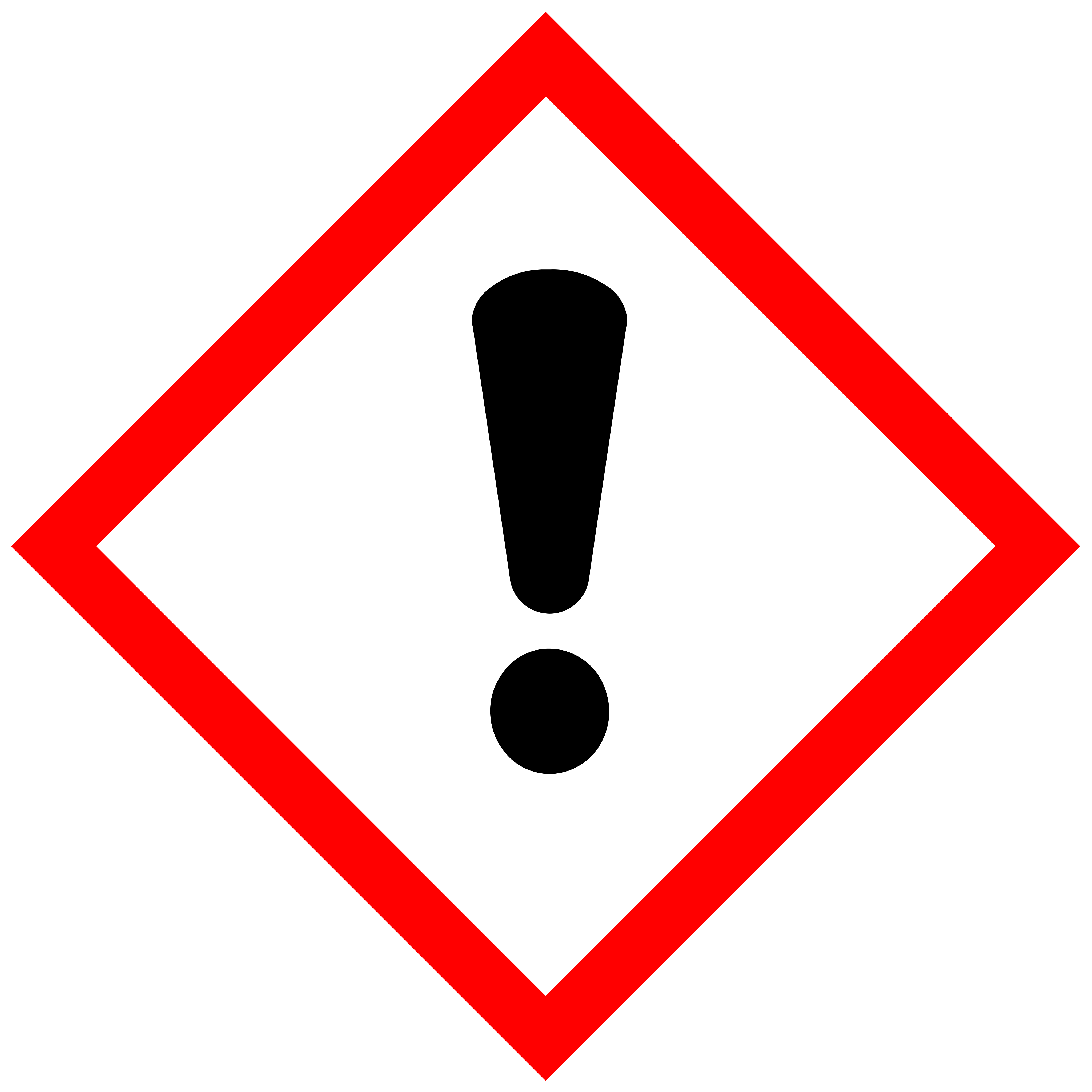
Industry GHS notices (PubChem)
These are industry self-reports to ECHA, not our regulatory assessment.
- H241(100.0%)- H241
- H242(100.0%)- H242
- H251- H251
- H316- H316
- H317(100.0%)- May cause an allergic skin reaction
- H319(100.0%)- Causes serious eye irritation
- H335- May cause respiratory irritation
- H361- Suspected of damaging fertility or the unborn child
- H400(68.8%)- Very toxic to aquatic life
- H410(25.6%)- Very toxic to aquatic life with long lasting effects
What The Sources Say
SCCS (EU Scientific Committee on Consumer Safety)3
EU 1223/2009 Annex III — SCCS opinion: Hydroquinone (HQ)
EU 1223/2009 Annex III — SCCS opinion: Hydroquinone methylether (MEHQ) in artificial nail systems
EU 1223/2009 Annex III — SCCS opinion: Opinion on The Use of Benzoyl Peroxide (BPO)
IARC (International Agency for Research on Cancer)1
IARC Group 3 — Not classifiable as to carcinogenicity. The available evidence is insufficient for a classification. This does NOT mean 'safe'; it means 'not enough data'. (Monograph volume: 36, Sup 7, 71). Caveat: IARC classifies HAZARD, not RISK — it says 'can cause cancer under some conditions', not 'causes cancer at cosmetic use levels'. Route and dose must be assessed separately. Data is a 01/2021 snapshot.
ToxValDB (EPA Toxicity Value Database)13
EPA ToxValDB skin/eye data — endpoint: Skin Irritation, classification: Not classified. Caveat: this is an aggregated record; dose, species and route of exposure must be considered together.
EPA ToxValDB skin/eye data — endpoint: Skin Sensitization, classification: Category 1. Caveat: this is an aggregated record; dose, species and route of exposure must be considered together.
EPA ToxValDB skin/eye data — endpoint: Eye Irritation, classification: Category 6.4A (Category 2A). Caveat: this is an aggregated record; dose, species and route of exposure must be considered together.
EPA ToxValDB skin/eye data — endpoint: Skin Sensitization, classification: Category 6.5B (Category 1). Caveat: this is an aggregated record; dose, species and route of exposure must be considered together.
EPA ToxValDB skin/eye data — endpoint: skin sensitisation: in vivo (non-LLNA), classification: High Frequency of Sensitization, species: guinea pig, study: skin sensitization, guideline: according to OECD Guideline 406 (Skin Sensitisation), year: 1996. Caveat: this is an aggregated record; dose, species and route of exposure must be considered together.
+8 more records.
Scientific References
- EPA CompTox Chemicals Dashboard — DSSTox identifiers mapped to CAS (2021r1)US EPA, Center for Computational Toxicology and Exposure
- EU CosIng — Cosmetic Ingredient Database full exportEuropean Commission, DG GROW
- Hydroquinone (HQ)SCCS — Scientific Committee on Consumer Safety
- Hydroquinone methylether (MEHQ) in artificial nail systemsSCCS — Scientific Committee on Consumer Safety
- IARC Monographs — Benzoyl peroxide (Group 3 — Not classifiable as to carcinogenicity)IARC — WHO Uluslararası Kanser Araştırmaları Ajansı
- Opinion on The Use of Benzoyl Peroxide (BPO)SCCS — Scientific Committee on Consumer Safety
- PubChem — CID-Synonym-filtered bulk + PUG REST propertiesNCBI / National Library of Medicine
- ToxValDB — cancerUS EPA — ToxValDB v97
- ToxValDB — genotoxicityUS EPA — ToxValDB v97
- ToxValDB — skin/eyeUS EPA — ToxValDB v97