
Allyl propionate
- CAS
- 2408-20-0
- EC
- 2193078
- PubChem CID
- 61319
- Molecular Formula
- C6H10O2
- Molecular Weight
- 114.1400 g/mol
A fragrance component. May cause allergies; therefore, its use is limited.
What does it do?
A component used to add fragrance to the product.
Details
A component used to add fragrance to the product. Its use in cosmetic products is restricted as it may cause allergic reactions. It may cause itching or redness in those with sensitive skin.
Hazards
Benefits
Functions
Restrictions
Where is it found?
Function & Use
Perfuming
Regulatory note
- EU 1223/2009 Annex IIIRestricted
Industry GHS notices (PubChem)
These are industry self-reports to ECHA, not our regulatory assessment.
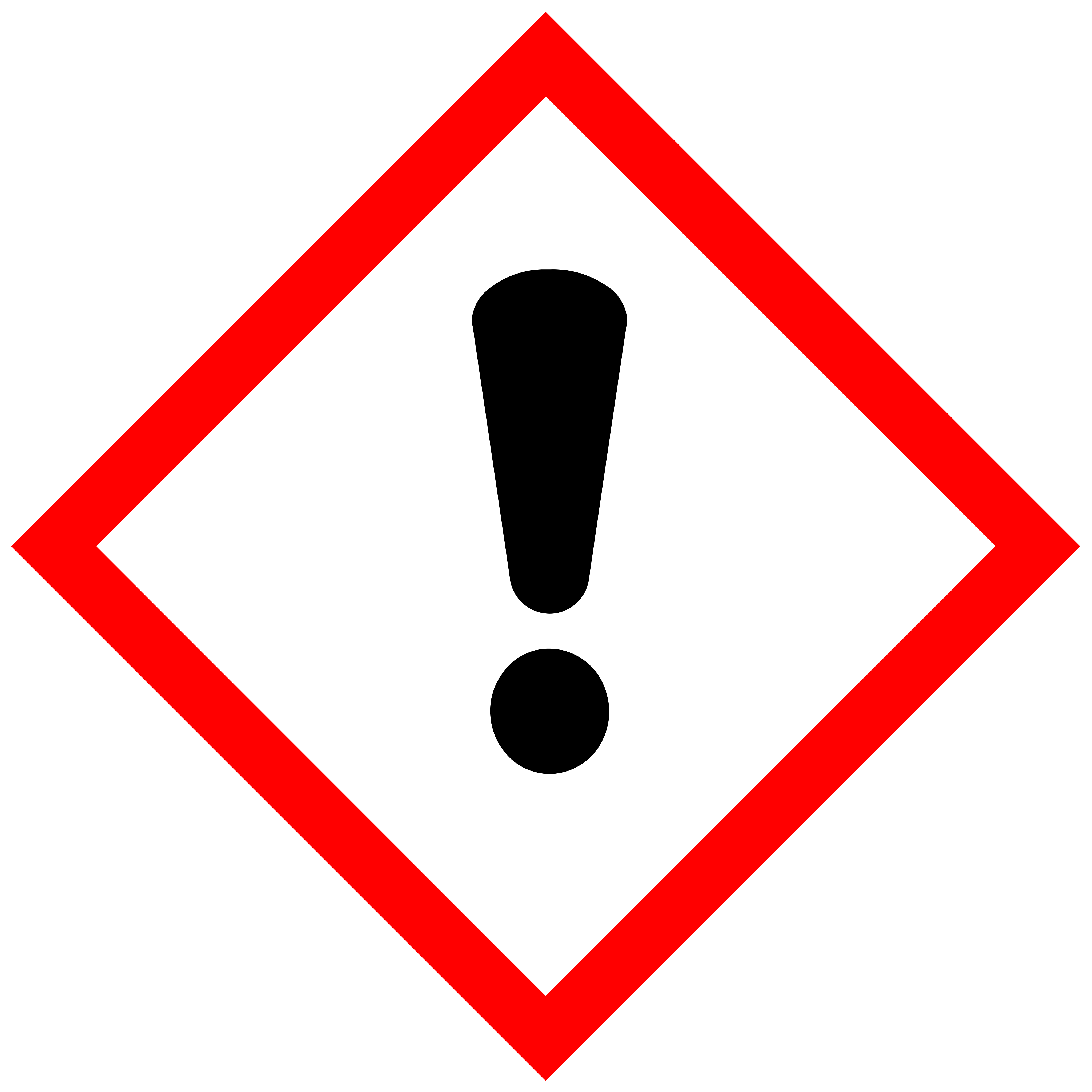
- H226(100.0%)- Flammable liquid and vapour
- H301(97.5%)- Toxic if swallowed
- H311- Toxic in contact with skin
- H315(100.0%)- Causes skin irritation
- H319(100.0%)- Causes serious eye irritation
- H335(17.1%)- May cause respiratory irritation
What The Sources Say
SCCS (EU Scientific Committee on Consumer Safety)3
EU 1223/2009 Annex III — SCCS opinion: The 1st Update of the Inventory of Ingredients employed in Cosmetic Products. Section II: Perfume and Aromatic Raw Materials
EU 1223/2009 Annex III — SCCS opinion: An Initial List of Perfumery Materials which must not form part of Cosmetic products except subject to the restrictions and conditions laid down
EU 1223/2009 Annex III — SCCS opinion: Opinion on Clarifications to SCCNFP/0392/00 "An initial List of Perfumery Materials which must not form part of Cosmetic Products except subject to the Restrictions and Conditions laid down"
IARC (International Agency for Research on Cancer)1
IARC Group 3 - Not classifiable as to carcinogenicity. The available evidence is insufficient for a classification. This does NOT mean 'safe'; it means 'not enough data'. (Monograph volume: Sup 7, 92). Caveat: IARC classifies HAZARD, not RISK - it says 'can cause cancer under some conditions', not 'causes cancer at cosmetic use levels'. Route and dose must be assessed separately. Data is a 01/2021 snapshot.
ToxValDB (EPA Toxicity Value Database)4
EPA ToxValDB skin/eye data — endpoint: skin sensitisation: in vivo (non-LLNA), classification: Not likely to be sensitizing, species: human, study: skin sensitization, guideline: equivalent or similar to other guideline: As mentioned below, year: 1979. Caveat: this is an aggregated record; dose, species and route of exposure must be considered together.
EPA ToxValDB skin/eye data — endpoint: eye irritation: in vivo, classification: Severe Irritation, species: rabbit, study: eye irritation, guideline: other guideline: as mentioned below according to, year: 1969. Caveat: this is an aggregated record; dose, species and route of exposure must be considered together.
EPA ToxValDB skin/eye data — endpoint: skin irritation: in vivo, classification: Severe Irritation, species: rabbit, study: skin irritation, guideline: other guideline: as mentioned below according to, year: 1974. Caveat: this is an aggregated record; dose, species and route of exposure must be considered together.
+1 more records.
EPA ToxCast (high-throughput in vitro screening)1
EPA ToxCast ER model: NO estrogen receptor activity found (AUC agonist=0, antagonist=0). Tested in 18 in vitro assays. Caveat: this is an in vitro screening model with no dose or exposure context; it does NOT mean an effect occurs in humans at cosmetic use levels.
Scientific References
- An Initial List of Perfumery Materials which must not form part of Cosmetic products except subject to the restrictions and conditions laid downSCCS — Scientific Committee on Consumer Safety
- EPA CompTox Chemicals Dashboard - DSSTox identifiers mapped to CAS (2021r1)US EPA, Center for Computational Toxicology and Exposure
- EU CosIng - Cosmetic Ingredient Database full exportEuropean Commission, DG GROW
- IARC Monographs - Pyrene (Group 3 - Not classifiable as to carcinogenicity)IARC — WHO Uluslararası Kanser Araştırmaları Ajansı
- Opinion on Clarifications to SCCNFP/0392/00 "An initial List of Perfumery Materials which must not form part of Cosmetic Products except subject to the Restrictions and Conditions laid down"SCCS — Scientific Committee on Consumer Safety
- The 1st Update of the Inventory of Ingredients employed in Cosmetic Products. Section II: Perfume and Aromatic Raw MaterialsSCCS — Scientific Committee on Consumer Safety
- ToxCast ER model - Pyrene (DTXSID3024289)US EPA — ToxCast / CompTox
- ToxValDB - genotoxicityUS EPA — ToxValDB v97
- ToxValDB - skin/eyeUS EPA — ToxValDB v97